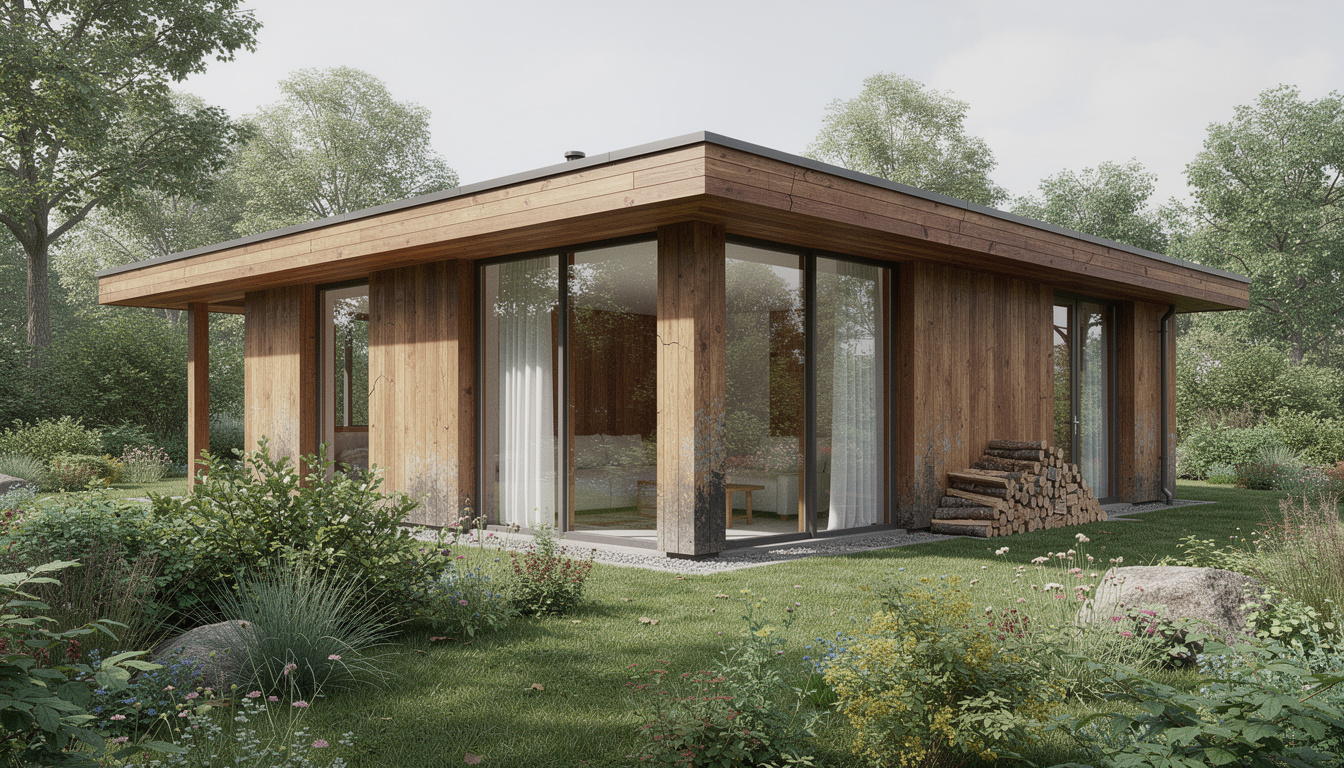
In brief:
- 🌲 Wooden house = renewable material, natural insulation, and carbon storage.
- ⚡ High energy performance, savings on bills, essential bioclimatic design.
- 🧰 Wood house maintenance necessary (cladding, treatments), plan budget and schedule.
- 🏗️ Wood construction = fast assembly, frequent prefabrication, costs vary by project.
- 🏡 Wood durability depends on technical choices, ventilation, and moisture protection.
Wooden house: advantages and disadvantages to know before getting started
Many future homeowners are attracted to the idea of a wooden house. This option combines an ecological image, a particular indoor comfort, and attractive thermal performance. However, the project requires technical choices, regular monitoring, and budget anticipation. Lucie and Marc, a fictional couple living on the outskirts of a large city, illustrate this journey: after consulting several builders and conducting a thermal study, they opted for a wooden frame with prefabrication in a workshop to reduce construction time and limit local nuisances. Their experience shows that the main interest of a wooden house lies in the combination of wood house ecology, wood house insulation, and good bioclimatic design.
This dossier is intended for those who want to deeply understand the advantages and disadvantages of wooden houses, offering concrete examples, reference figures, and advice to turn an ecological dream into a sustainable project. We analyze here the raw material, energy performance, wood house cost, wood house maintenance, and risks to anticipate to help you make an informed decision.
Wooden house: material, ecology, and wood house insulation
Wood is at the heart of the debate on sustainable construction. As a renewable and minimally processed material, it has a favorable carbon footprint. One cubic meter of wood stores about one ton of CO₂, which explains why many industry players emphasize wood durability as a main argument. For Lucie and Marc, choosing local and certified species reduced the carbon footprint of the site.
Wood has low thermal conductivity, making it an excellent natural insulator. Combined with supplementary insulation (wool, cellulose, insulating panel), it allows achieving performance levels often superior to brick or concrete walls. Additionally, the hygroscopic capacity of wood regulates indoor humidity, contributing to comfort and air quality.
Technical and ecological advantages
List of benefits observed on recent sites:
- 🌱 Carbon storage and wood house ecology.
- 🔥 Low thermal conductivity = better performance from the design stage.
- 🏗️ Possible prefabrication = reduction of waste and on-site time.
- 🏡 Healthy indoor atmosphere thanks to humidity regulation.
In 2025, the wood construction sector is evolving rapidly: growing demand requires responsible supply chains. Prospective studies indicate a significant increase in wood use between 2019 and 2050, implying adapted forest and industrial choices.
| Criterion 📌 | Advantage ✅ | Remark ⚠️ |
|---|---|---|
| Carbon storage 🌲 | Emission reduction | Species and origin to verify |
| Thermal insulation ❄️ | Low conductivity | Requires supplementary insulation |
| Indoor air quality 🌬️ | Hygrometric regulation | Ventilation indispensable |
Concrete example: Lucie and Marc chose a local fir wooden frame, adding 20 cm of cellulose wadding in the attic and walls. Result: estimated 30% reduction in energy consumption compared to an equivalent standard construction.
To deepen practical and legal aspects of wooden houses, several online resources offer useful summaries, like the guide of advantages and disadvantages or the technical analysis provided by prokit.
Key insight: wood combines ecology and natural insulation, but its performance strongly depends on species and design choices.
Wood construction: speed, prefabrication, and wood house cost
Wood house construction is often characterized by significant prefabrication. Elements (frame, panels, modules) come out of the workshop and are quickly assembled on site, reducing time and disturbances. For Lucie and Marc, prefabrication shortened the site by several weeks and limited neighborhood impact.
Execution speed is a major asset. Sites can have the structure waterproof and airtight within a few weeks after foundation installation. This time gain also translates into a reduction of indirect costs (guarding, equipment rental, long-term labor).
Wood house cost: elements to anticipate
The cost per square meter of a wooden house can be 3 to 10% higher than a traditional construction depending on complexity, finishing level, and required protections (fireproofing, treatments). Here is a list of budget items:
- 💶 Price of the structure and prefabrication.
- 🛠️ Treatments and finishes (cladding, stains).
- 🔌 Supplementary insulation and high-performance joinery.
- 🧯 Fire safety measures and DTU 31.2 compliance.
| Item 💼 | Average cost €/m² 💰 | Comment 📝 |
|---|---|---|
| Wood frame structure | 600 – 900 | Varies by prefabrication and species |
| Cladding and finishes | 80 – 250 | Maintenance to plan |
| Insulation and airtightness | 70 – 200 | Crucial for energy performance |
The economic situation strongly influences the final cost: material inflation, rising interest rates, and regulatory requirements can increase budgets. Practical resources like a dossier on energy savings and ecological houses offer comparisons to better appreciate price gaps.
To reduce wood house cost, several strategies exist: standardize plans, favor prefabrication, choose local species, and negotiate a global package with a recognized builder. Lucie and Marc saved 7% by accepting standard panels rather than custom modules.
Key insight: construction speed is a concrete advantage, but wood house cost remains sensitive to technical choices and the economic context.
Wood house maintenance, humidity, and wood durability
One essential point to consider is maintenance. Mainly the cladding requires periodic treatments (stain, saturator) every 3 to 5 years depending on exposure. This represents an estimated annual budget between €300 and €700 depending on the size and state of the coating. For Lucie and Marc, an annual maintenance schedule was put in place as soon as the work was completed.
Wood may be attacked by biological risks: wood-boring insects, wood-decaying fungi, or dry rot in case of persistent moisture. Prevention involves careful design: water drainage, prohibition of moisture accumulation at the wall base, preventive treatments, and effective ventilation.
- 🧰 Regular cladding maintenance (stain, cleaning).
- 💧 Moisture monitoring and implementation of an efficient mechanical ventilation system (VMC).
- 🔍 Periodic inspection of sensitive points (corners, joints, base).
- 📅 Annual budget to plan for maintenance work.
| Risk ⚠️ | Prevention ✅ | Indicative cost € 🧾 |
|---|---|---|
| Rot and fungi | VMC, treatment, ventilation | 200 – 2000 |
| Insect attack | Preventive treatment, resistant species | 150 – 1500 |
| Cladding deterioration | Stain every 3-5 years | 300 – 700/year |
It is also important to consider the effect of time on aesthetics: wood ages and develops a patina. Some people seek this patina, others prefer maintenance to keep a new appearance. Maintenance is therefore a style choice as much as a protection.
For complementary practical advice on maintenance and technical pros/cons, consult summaries like those from HelloArtisan or MMA information. These resources provide guidelines for budgeting and planning interventions.
Key insight: wood house maintenance strongly determines wood durability; it must be considered from design and included in the annual budget.
Bioclimatic design, acoustics, and energy performance
A well-designed wooden house maximizes the material’s assets. Bioclimatic design — orientation, inertia, solar protections — helps avoid summer overheating and exploit solar gains in winter. In hot regions, protections such as awnings, vegetation, or blinds are essential to preserve comfort.
Wood house insulation combined with rigorous airtightness is the key to achieving high energy performance. Studies show savings of about –25% to –35% on the energy bill compared to conventional construction, thanks to wood’s quick thermal response and a high-performance envelope.
- 🌞 Orientation and solar protections to limit overheating.
- ❄️ Reinforced insulation and controlled thermal bridges.
- 🔇 Acoustic improvements: decoupled partitions, absorbing insulators.
- ♻️ Integration of renewable energies to optimize the balance.
| Objective 🎯 | Solution 🛠️ | Expected result 📈 |
|---|---|---|
| Limit overheating | Blinds, awnings, plantings | Improved summer comfort |
| Reduce consumption | Insulation+airtightness | -25% to -35% energy |
| Improve acoustics | Decoupled partitions | Noise attenuation |
Common issue: acoustics. Lightweight structures sometimes suffer from poor sound insulation. The solution is to integrate specific partitions, heavy insulators, and massive floors from the design stage. This implies an extra cost but guarantees suitable sound comfort.
From an energy standpoint, feedback shows that by combining good insulation, double-flow ventilation, and efficient equipment, the wooden house can achieve a very low energy bill over the long term. Additional information is available through field feedback and comparative analyses, for example on GoodHabitat.
Key insight: the energy performance and acoustics of a wooden house primarily depend on quality bioclimatic design and upfront technical choices.
Practical advice, choosing the builder, and property value
Choosing a specialized and recognized builder is essential. Look for professionals mastering DTU 31.2, capable of providing a thorough thermal study and airtightness guarantee. Lucie and Marc requested several references, visited sites, and opted for a builder offering a perfect completion warranty and real experience in prefabrication.
Planning maintenance from the design stage avoids unpleasant surprises: integration of secure access to cladding, choice of suitable species, and annual budget for treatments. Acoustic arrangements and efficient ventilation should be budgeted at the start to limit costly corrective work later.
- 🧾 Verify builder’s references and previous projects.
- 🔍 Require a thermal study and detailed airtightness plans.
- 💡 Think long term: maintenance and resale budgets.
- 📈 Property value increase: +10 to +15% possible depending on market.
| Action to take ✔️ | Why ❓ | Expected impact 📊 |
|---|---|---|
| Compare several quotes | Evaluate price and services | Reduce financial risks |
| Verify references | Ensure quality of work | Site serenity |
| Plan maintenance | Protect investment | Increased durability |
Regarding property value, a well-designed and maintained wooden house attracts buyers sensitive to ecology and comfort. Studies indicate a potential added value of about +10% to +15% depending on the regions and finish quality. For practical guides and comparisons, also consult Mapetitemaison or the summary analysis available on BricolageIdéeCadeau.
Key insight: choosing an expert builder and anticipating maintenance turns wood house advantages into durable heritage assets.
{“@context”:”https://schema.org”,”@type”:”FAQPage”,”mainEntity”:[{“@type”:”Question”,”name”:”Is a wooden house more economical in the long term?”,”acceptedAnswer”:{“@type”:”Answer”,”text”:”In the long term, a well-designed wooden house can generate energy savings of 25 to 35%. These savings help offset a possible initial extra cost, especially if maintenance is well planned.”}},{“@type”:”Question”,”name”:”How often should cladding be maintained?”,”acceptedAnswer”:{“@type”:”Answer”,”text”:”Cladding generally requires a stain or saturator every 3 to 5 years. The average annual budget is around €300 to €700, varying according to surface and exposure.”}},{“@type”:”Question”,”name”:”How to improve acoustics in a wooden house?”,”acceptedAnswer”:{“@type”:”Answer”,”text”:”Prefer decoupled partitions, heavy insulators, and floors with inertia. Integrating these solutions from the design stage avoids later extra costs.”}},{“@type”:”Question”,”name”:”Should humidity and fungi be feared?”,”acceptedAnswer”:{“@type”:”Answer”,”text”:”With careful design (water drainage, ventilation, treatments), the risks are manageable. Regular monitoring of sensitive points is recommended.”}}]}Is a wooden house more economical in the long term?
In the long term, a well-designed wooden house can generate energy savings of 25 to 35%. These savings help offset a possible initial extra cost, especially if maintenance is well planned.
How often should cladding be maintained?
Cladding generally requires a stain or saturator every 3 to 5 years. The average annual budget is around €300 to €700, varying according to surface and exposure.
How to improve acoustics in a wooden house?
Prefer decoupled partitions, heavy insulators, and floors with inertia. Integrating these solutions from the design stage avoids later extra costs.
Should humidity and fungi be feared?
With careful design (water drainage, ventilation, treatments), the risks are manageable. Regular monitoring of sensitive points is recommended.